
Okay so here’s a thing that’s been on my mind lately. Remember bajra roti? Like the thick, slightly rough one your dadi or nani used to make in winter, usually with a fat dollop of ghee melting into it? Something you ate because that’s what was around, not because you wanted to. Wheat was the “upgrade.” Bajra got left behind.
And now here we are, years later, watching bajra flour show up in health food stores, wellness Instagram pages, and suddenly everyone’s talking about it like it’s some newly discovered superfood. Which, honestly, it’s a little funny to us at Urban Platter, because bajra never actually went anywhere. We just stopped paying attention to it for a while.
It was never really “basic,” we just treated it that way
Bajra, or pearl millet if you want to get technical about it, has been grown across Rajasthan, Gujarat, Haryana, all these dry, tough regions where wheat honestly wouldn’t have a chance. It grows where other crops just give up. That’s not a small thing. Farmers have relied on this grain for generations specifically because it’s tough, dependable, doesn’t need perfect conditions to survive.
And there’s something almost funny about the fact that a grain once eaten purely out of necessity is now the thing people with every dietary option in the world are actively seeking out. Like, we had it right there the whole time and just decided wheat looked shinier.
Why it’s actually good for you, not just nostalgic
One of the reasons bajra flour is making a comeback isn’t just tradition – it’s also its nutritional profile. Compared to many refined flours, bajra flour retains its natural fibre and nutrients, making it a more wholesome choice. Its high fibre content helps slow digestion and may support a more gradual release of energy as part of a balanced diet, making it a satisfying ingredient for everyday meals.
It’s also naturally gluten-free, making it a great alternative for those looking to reduce their wheat intake or explore a wider variety of grains. Naturally rich in minerals such as iron, magnesium, and phosphorus, along with a good amount of protein and fibre, bajra flour is a wholesome ingredient that fits easily into a balanced everyday diet.
The whole winter thing, it’s actually not just a myth
You’ve probably heard people say bajra is a “winter food.” There’s actually some logic behind that, not just old wives’ tale stuff. In Ayurveda it’s considered warming, like it generates heat in the body, which sounds a little mystical maybe, but there’s a physical reason behind it too. Because it digests slower and is denser, it genuinely feels heavier, warmer, more grounding to eat, especially compared to something light like plain wheat or rice. Eating it in December just makes sense in a way that’s hard to explain until you’ve actually done it.
And honestly, this seasonal thing is part of why it’s coming back. People are getting a bit more thoughtful about eating differently depending on the season instead of just eating the exact same stuff twelve months a year. Bajra fits right into that shift.
It’s not just for rotis, not even close
Here’s what a lot of people don’t realise. Bajra roti is great, don’t get us wrong, especially with a bit of jaggery and ghee, that combination is honestly unbeatable. But the flour does so much more than that.
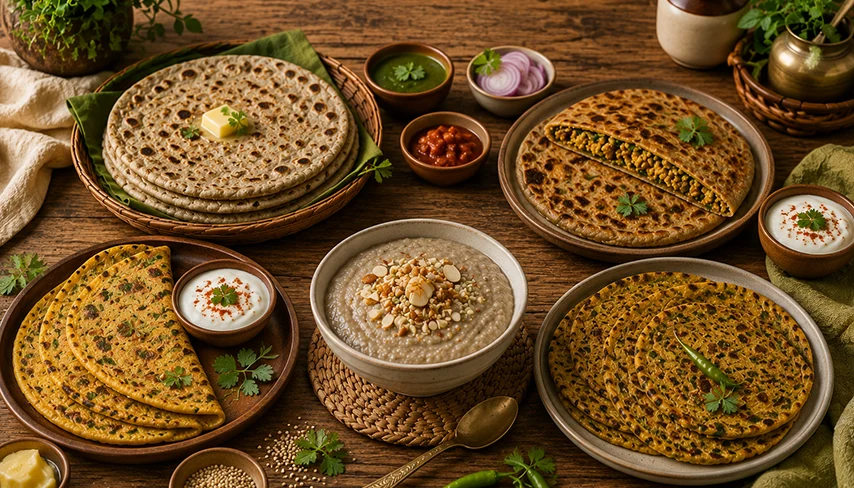
You can use it in parathas, in thepla, it’s got this slightly nutty, earthy flavour that plain wheat just doesn’t have. If you’re not ready to go full bajra, mix it with wheat or jowar or besan, ease into it instead of diving in headfirst. It also works surprisingly well in porridge, in savoury pancakes, even in some baked stuff if you’re feeling experimental. It’s got this dense, slightly coarse texture that some people love immediately and others need a bit of time to warm up to, but either way, it’s way more flexible than the “just for roti” reputation it’s had for years.
Honestly, it’s less about bajra and more about us finally catching up
If you zoom out a little, the real story here isn’t even about bajra changing. It’s about us, as people, finally starting to care about whole grains again instead of just refined, processed stuff. There’s this growing interest in going back to traditional, regional food, the kind our families were eating decades ago before packaged and polished grains took over everything.
Bajra just happens to fit perfectly into that shift, because it barely needs processing to be good for you, it’s already whole, already nutritious, no upgrades required. It’s less that bajra suddenly became trendy and more that our understanding of what’s actually healthy finally caught up to what this grain was doing all along.
Conclusion
Bajra flour’s comeback isn’t some clever marketing trick or a random health fad that’ll disappear in six months. It’s a real shift toward eating whole grains, keeping blood sugar steadier, and honestly, just respecting traditional Indian food a little more than we have in recent years. Between the fibre, the fact that it’s naturally gluten-free, and its overall nutrition, it makes total sense as something worth having in your kitchen regularly, not just occasionally. And it turns out it’s a lot more flexible in cooking than most people give it credit for.
At Urban Platter, honestly, we just think bajra is proof that sometimes the healthiest choices were never actually lost, we just stopped looking at them properly. Whether you’re making it the exact way your grandmother did, or trying something a bit newer with it, it’s genuinely worth making space for in your kitchen again.
FAQs
Can diabetics eat bajra flour?
Bajra flour has a lower glycaemic response than many refined grains due to its fibre content. However, individuals with diabetes should consult their healthcare professional regarding appropriate portion sizes and how it fits into their overall diet.
Is it okay for people who can’t have gluten?
Yep, bajra’s naturally gluten-free, just make sure it hasn’t been processed alongside wheat somewhere, cross-contamination can happen.
Do I only eat this in winter?
Not at all, winter’s traditionally when people lean into it more because of its warming nature, but there’s no rule saying you can’t eat it year round.
How does it compare to regular wheat flour nutrition-wise?
More fibre, more iron, lower impact on blood sugar overall. Definitely denser nutritionally than refined wheat flour.
Can I mix it with other flours?
Absolutely, mixing with wheat, jowar, or besan is honestly the easiest way to start if pure bajra feels like too much of a jump at first.
What’s the easiest way to start using it?
Just make a simple bajra roti with your usual sides, or mix it into your regular wheat flour for parathas. Easiest way in, no big adjustment needed.